
A clinical psychologist in Dubai reads five research papers on online therapy in full. What the evidence actually shows — and where it genuinely runs out — for clients navigating life in the UAE.
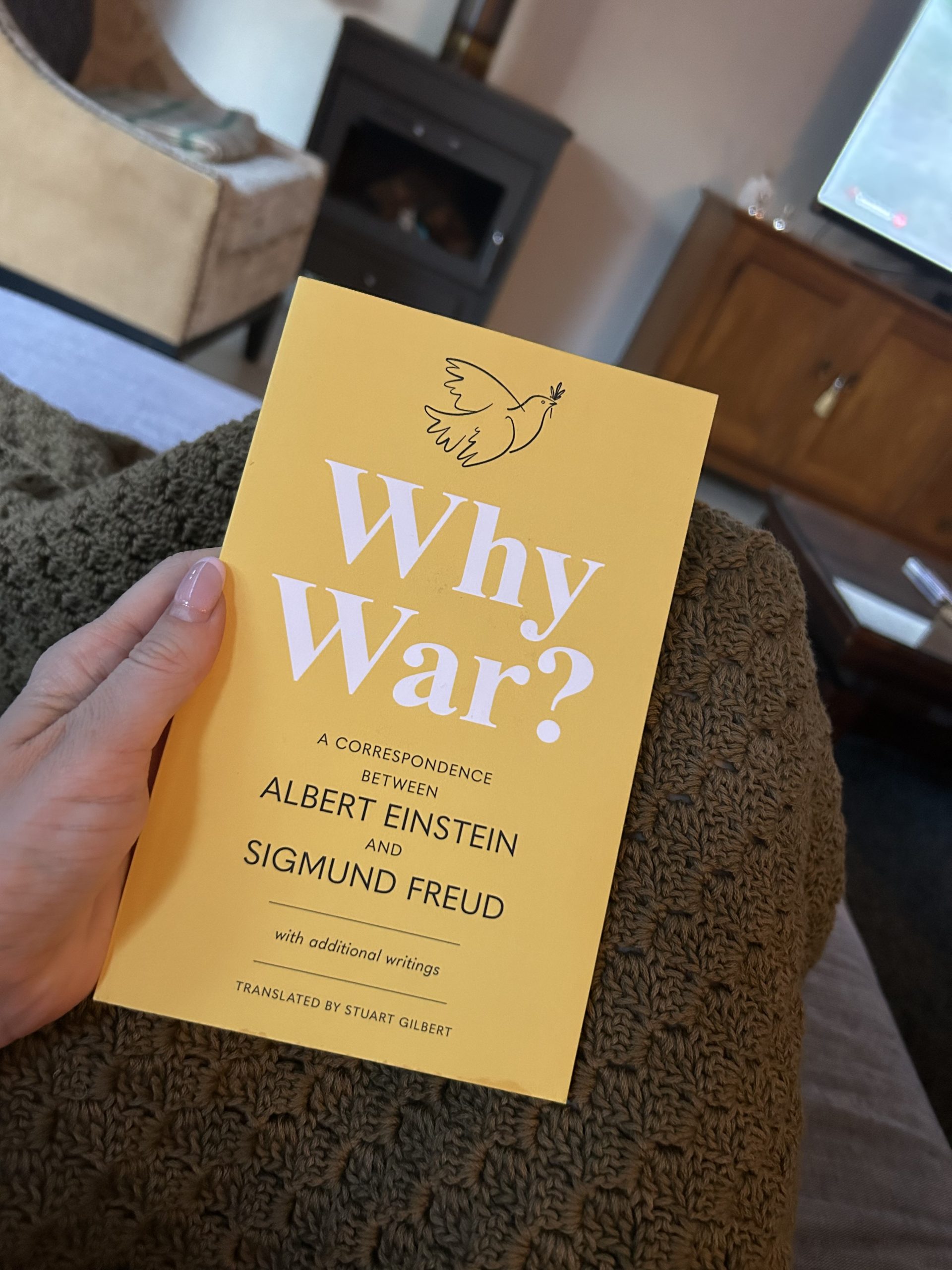
Why War? What Einstein and Freud Knew and What It Means for Us Right Now
By Christi Gadd | Clinical Psychologist & Neuropsychologist | Dubai via Thrive Wellbeing Centre, JLT | Online across the UAE
In 1932, Albert Einstein wrote a letter to Sigmund Freud and asked one question:
Why war?
I read their correspondence – the first chapter of a slim book titled Why War? – on a quiet Sunday afternoon in April 2026, while the world felt heavier than usual.
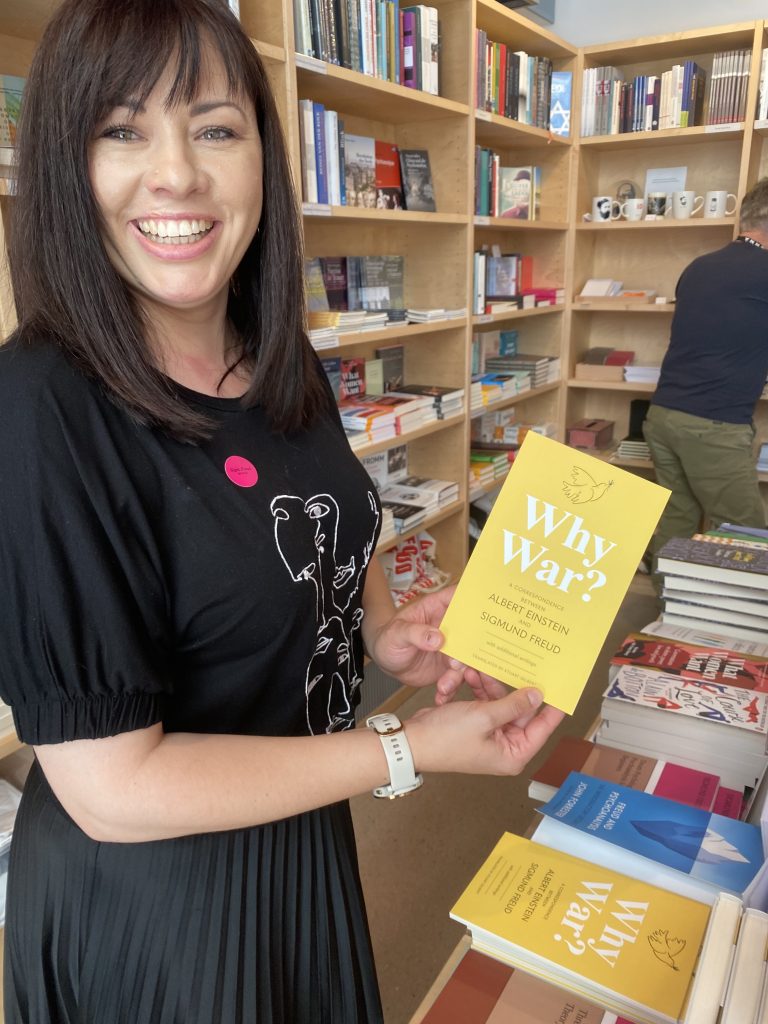
I bought it about a year ago, on a visit to the Sigmund Freud Museum in Vienna with my friend Larissa Ernst from the Satori Health Centre.
It sat on my pile for months. And suddenly, this felt like the right time to finally open it. (It also validated that the habit I have of hoarding books with the intention to read them might not be as wasteful as I thought.)
Ninety-three years later, Einstein’s question still has no easy answer. But Freud’s response contains something that has stayed with me — or, more honestly, something I’ve been arguing with since I read it. Something that feels more relevant than ever for those of us living through conflict, uncertainty, and the particular weight of life in the Middle East right now.
 What Is the Book Why War?
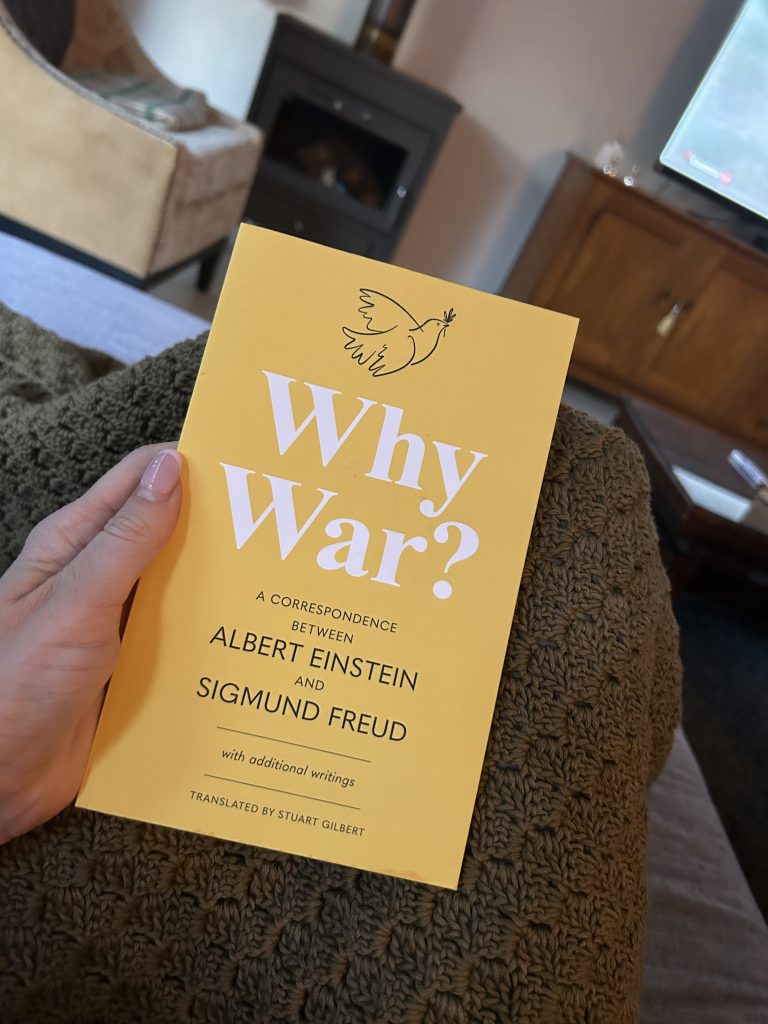
Why War? is a short but profound exchange of letters between Albert Einstein and Sigmund Freud, written in 1932 at the request of the League of Nations. Einstein, troubled by the rise of fascism and the threat of another world war, wrote to Freud – the father of psychoanalysis – asking whether psychology could offer any insight into humanity’s drive toward destruction.
Freud’s response is honest, uncomfortable, and surprisingly hopeful (albeit very difficult to read and make sense of – he spoke a very different kind of English than I do).
What Freud Said: Two Instincts at War Within Us
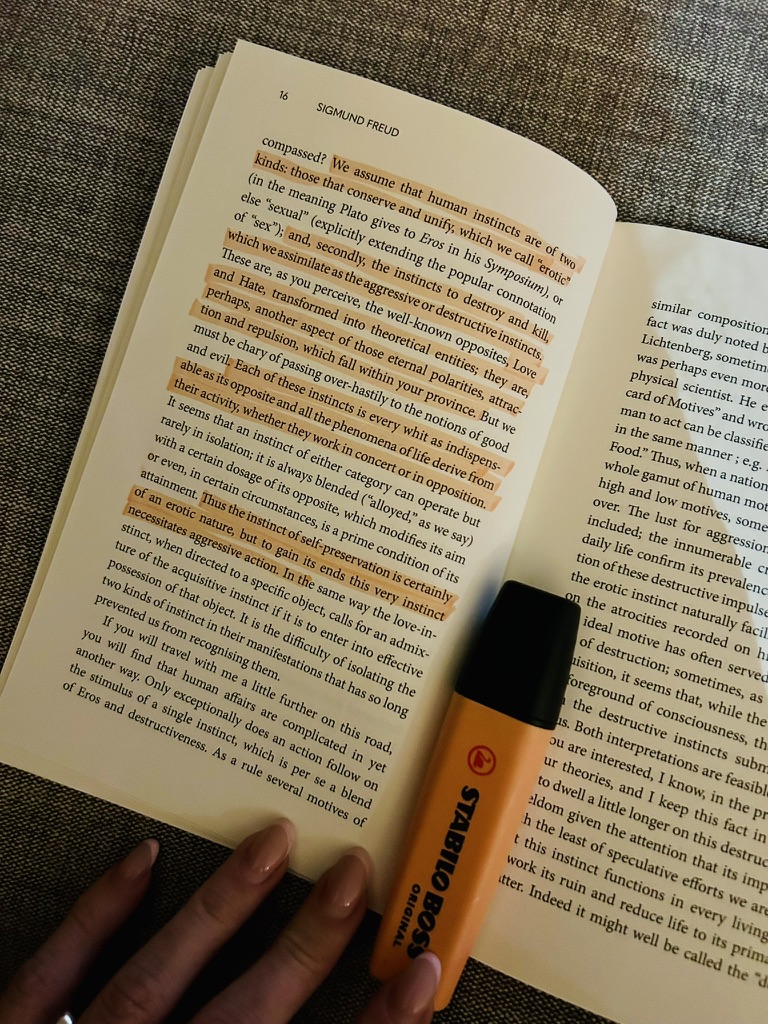
Freud believed that human beings are driven by two fundamental instincts that exist in constant tension.
The first is Eros – the instinct toward life, love, and connection. This is the part of us that reaches toward other people. That builds families, friendships, and communities. That feels grief when strangers suffer on the other side of the world.
The second is what Freud called the death instinct – the drive toward aggression, destruction, and dissolution. He didn’t think this was evil or unusual. He saw it as a basic feature of human nature, as fundamental as hunger or the need for warmth. The purpose of the death instinct is protection – it gives us the capacity to fight for our lives or our futures.
Each of these instincts is every whit as indispensable as its opposite and all the phenomena of life derive from their activity, whether they work in concert or in opposition.
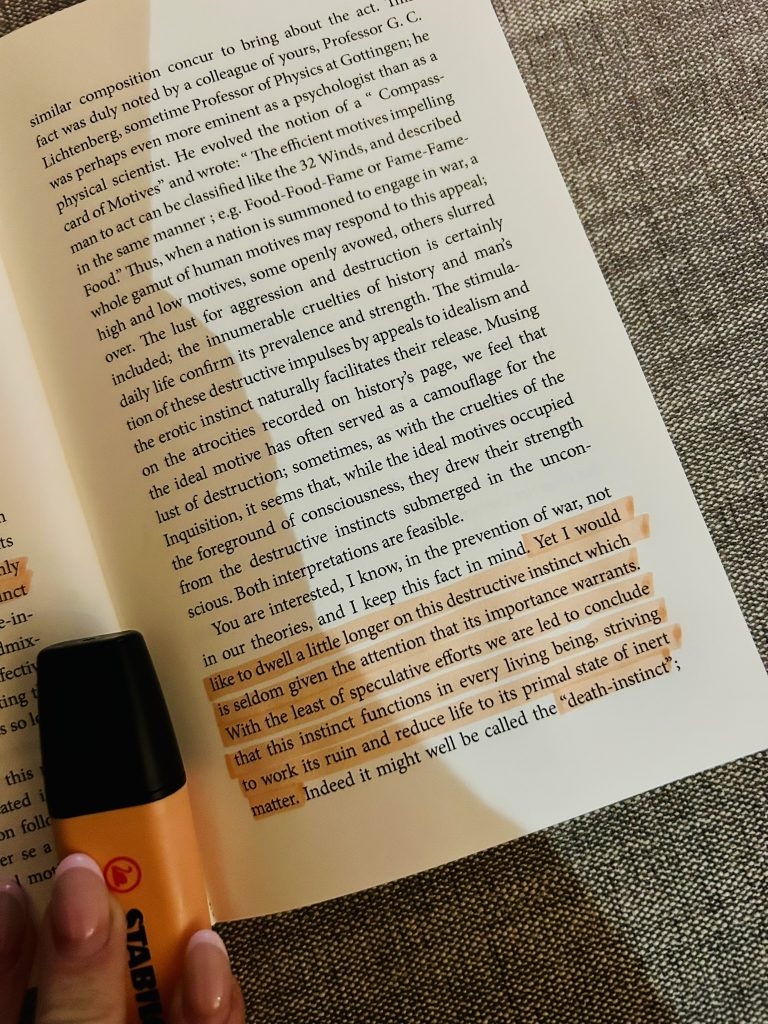 Here is the uncomfortable truth Freud offered Einstein: we cannot eliminate the destructive instinct. It is woven into what we are. Trying to remove it completely is naive.
But we can redirect it.
The Only Real Antidote to War, According to Freud
Freud’s answer to Einstein’s question – why war, and can we stop it? – was essentially this:
The antidote to destruction is Eros.
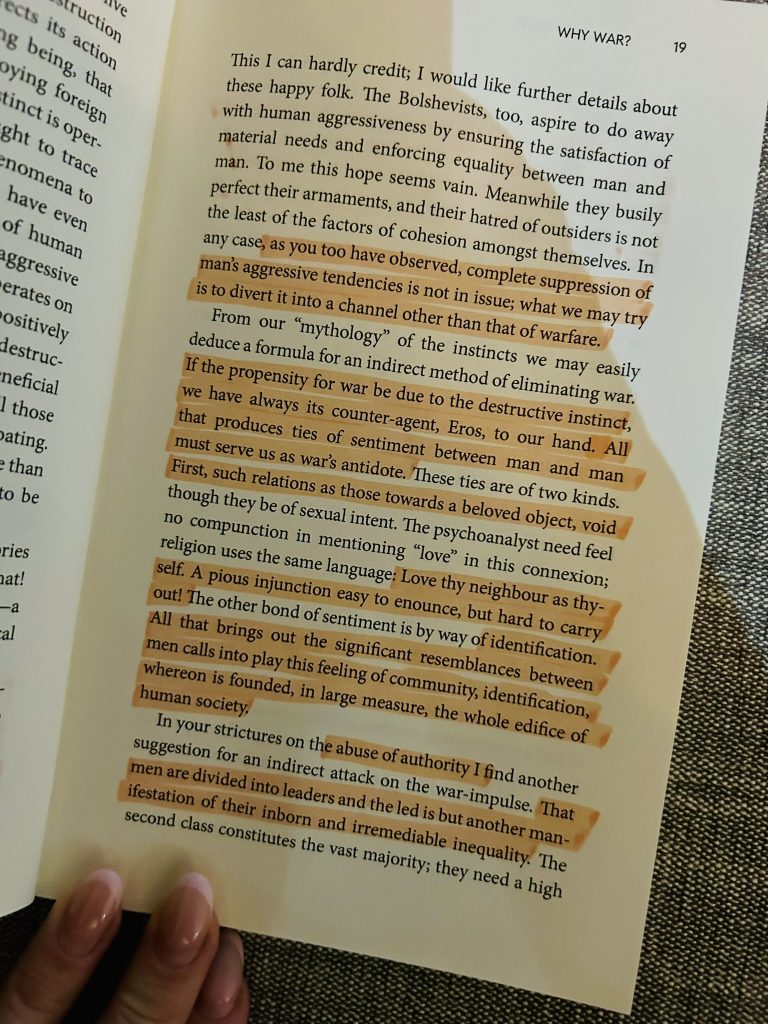
If the propensity for war be due to the destructive instinct, we have always its counter-agent, Eros, to our hand. All that produces ties of sentiment between man and man must serve us as war’s antidote. These ties are of two kinds.
First, such relations as those towards a beloved object, void though they be of sexual intent. The psychoanalyst need feel no compunction in mentioning “love” in this connexion; religion uses the same language: Love thy neighbour as thy-self. A pious injunction easy to enounce, but hard to carry out!
The other bond of sentiment is by way of identification. All that brings out the significant resemblances between men calls into play this feeling of community, identification, whereon is founded, in large measure, the whole edifice of human society.
Not laws alone. Not punishment or deterrence. Not treaties.
Connection. The felt sense that the person in front of you – even the stranger, even the one you disagree with – is also a human being. Someone with a heart that beats the same way yours does.
Freud wrote that what holds human society together has always been this feeling of identification with each other. The recognition of significant resemblances between ourselves and others.
When that recognition disappears – when we stop seeing the other as fully human – the destructive instinct has nothing to push against.
This is what psychologists today call dehumanisation. The research is more debated than is often suggested — dehumanisation is not the only road to violence, and some recent work has pushed back on calling it the precondition — but the broad pattern is consistent with what Freud suspected. People do not easily harm those they fully see as human. Violence almost always begins with othering.
What This Means for Those Living Through Conflict Right Now
I am writing this as a psychologist working with clients in Dubai and the UAE – a community that has been living with missile alerts, uncertainty, and grief.
I am not a political commentator. I will not pretend to have answers to the geopolitical complexities of the region.
But as a psychologist, I believe there are things each of us can do. Not grand gestures. Small, daily acts of choosing Eros over its opposite.
Notice when your own thinking becomes us vs them. The tendency to divide the world into us and them is a very human response to threat – we need to convince ourselves that “they” are not human in order to disconnect ourselves when our lives are in danger and we need to fight to protect ourselves. It is worth catching in yourself – what is the outcome if we all continue to dehumanise each other? The threat just perpetuates. We need to actively fight this instinct to dehumanise.
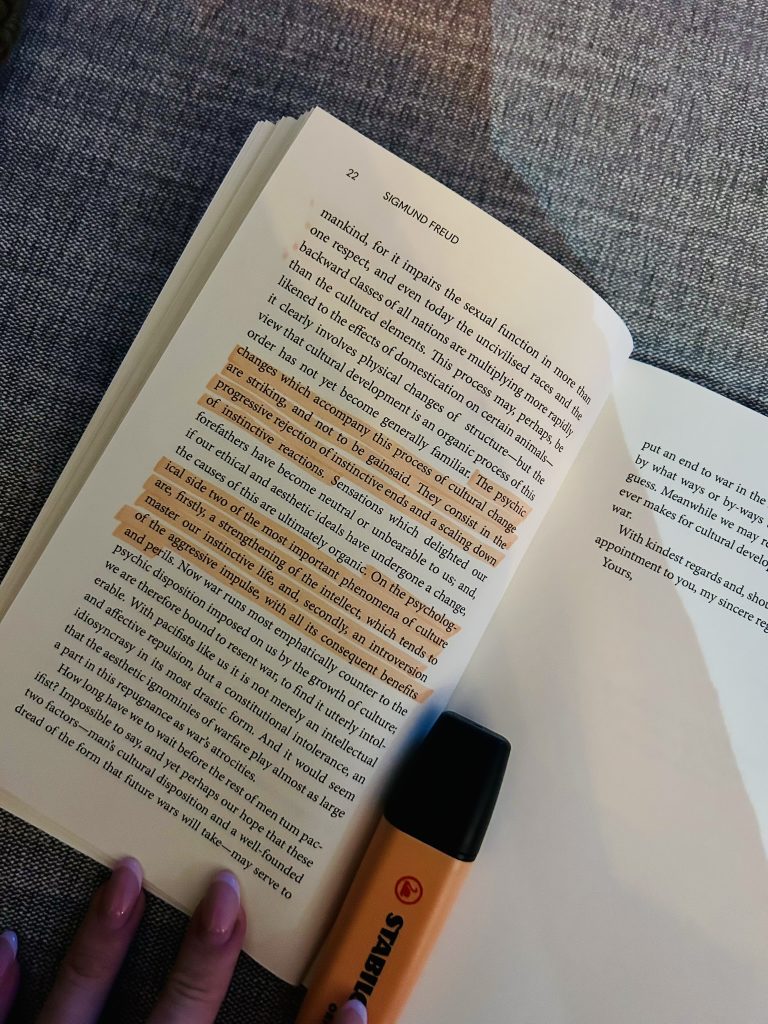
The psychic changes which accompany this process of cultural change are striking, and not to be gainsaid. They consist in the progressive rejection of instinctive ends and a scaling down of instinctive reactions.
See the humanity in the person you disagree with. Not agreeing with them. Not excusing harm. But recognising that they, too, carry a story you don’t fully know.
Tend to your connections. The ties of love, friendship, and community are not small things in the face of global crisis. According to Freud, they are the structural foundation of a peaceful world. Every relationship you nurture is, quietly, an act of resistance.
 Why Why War? Is Worth Reading Right Now
If you are living in Dubai, the UAE, or anywhere in the Middle East and you are trying to make sense of what is happening around you – this book is worth your time, but be prepared, it’s a difficult read.
No, wait – I take that back – if you are living anywhere on the beautiful planet and you are trying to make sense of what is happening around you – struggling through the intense, old school, Freudian English might be worth it!
It will not give you easy answers. Neither Einstein nor Freud expected to find them.
But it will give you something perhaps more valuable: a framework for understanding why human beings keep making the same choices – and a small, genuine reason to hope that we might, one day, choose differently.
Einstein closed his letter with weary honesty. He said he didn’t really expect a solution. He just hoped that by thinking clearly, they might move the world – however slowly – toward something better.
Freud agreed. He didn’t know when. He wasn’t sure it was possible.
But he hoped.
Ninety-three years later, so do I.
TL;DR: Why War by Einstein and Freud
- Why War? is a 1932 correspondence between Albert Einstein and Sigmund Freud
- Freud argued that human beings have two fundamental instincts: Eros (love and connection) and a death instinct (aggression and destruction)
- We cannot eliminate the destructive instinct – but we can counter it with connection
- Dehumanisation – failing to see the humanity in others – is the psychological precondition for violence
- The antidote to war, according to Freud, is Eros: love, identification, and the felt sense of our shared humanity
Christi Gadd is a DHA registered Clinical Psychologist (Dubai) and HPCSA registered Clinical Psychologist & Neuropsychologist (South Africa). She sees Dubai-based clients online and practices at Thrive Wellbeing Centre, Dubai.
To book an appointment:
reception@thrive.ae
+971 56 895 2347 | +971 4 514 7386
Keywords: Why War, Einstein, Freud, psychologist Dubai, mental health UAE, online psychologist Dubai, conflict psychology Middle East, Freud death instinct, Eros and destruction, dehumanisation psychology
Related Posts

Comments (0)