
When someone dies, the freezer fills up. People arrive with lasagne and banana bread and…
Girlhood Isn’t a Life Stage — It’s a Feeling
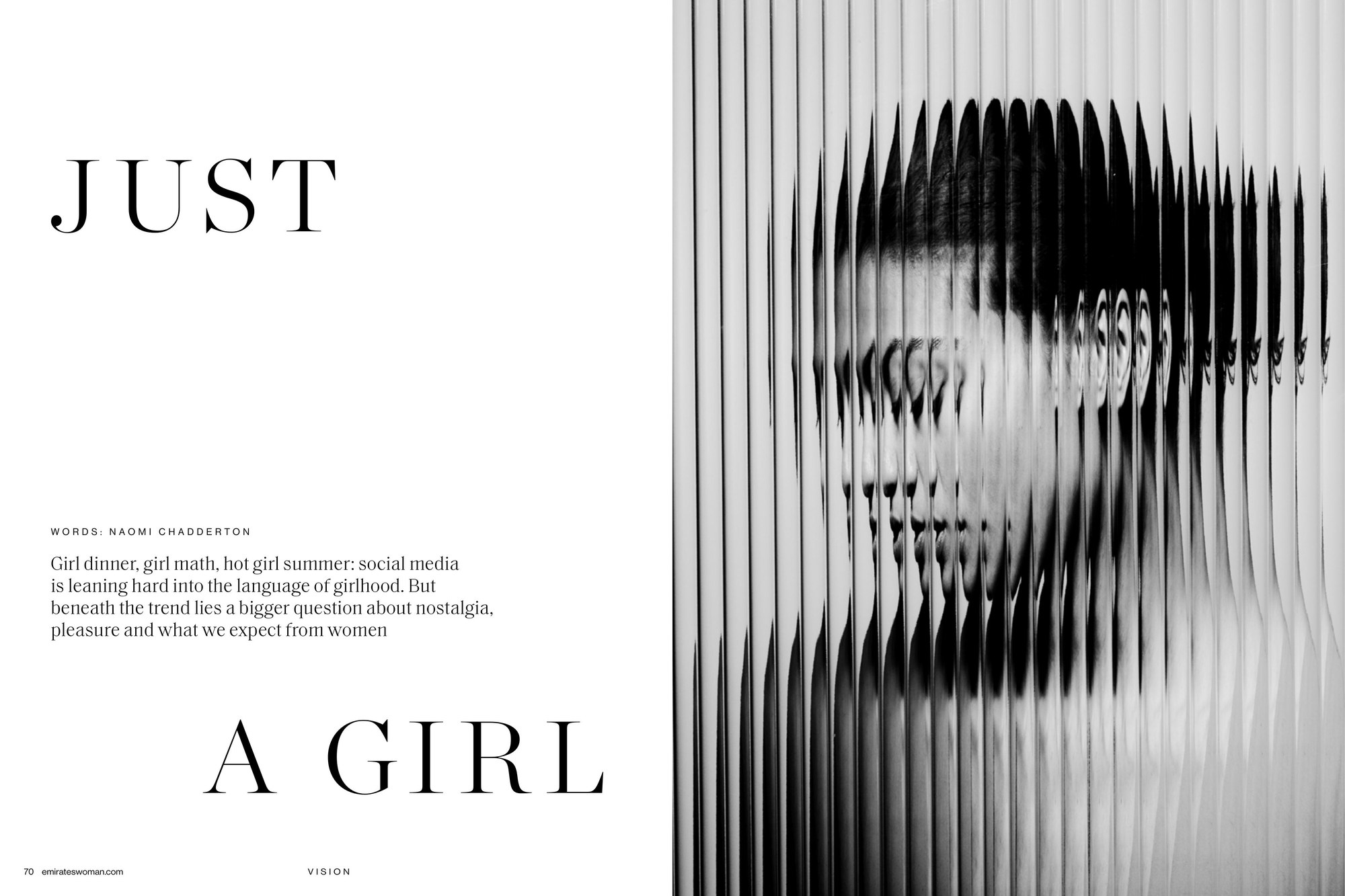
I was recently invited to contribute to a feature in Emirates Woman on the “girlhood” trend — girl dinner, girl math, hot girl summer, and the quiet return to women calling themselves “girls.”
Magazine features work by taking a line or two from each contributor, so only a small part of what I wrote made it into print. That is simply how the format works. But there was more I wanted to say — so here is my full contribution: the questions I was asked, and my answers in full.
What defines girlhood, and why does it hold such emotional power?
Think about the last time you ate a childhood snack, heard a song from your school years, or walked into a room that smelled exactly like a friend’s house used to. For a second, you weren’t just remembering — you were there. That’s not a coincidence. Sensory memory is powerful like that.
Girlhood isn’t just a life stage — it’s more about chasing a feeling. Perhaps remembering a time where feeling things intensely was normal, even expected. Where you could be completely consumed by a friendship, a song, an obsession, without anyone questioning your professionalism or your composure. Where you could collect all the posters of your favourite band and paste them all over your room without worrying about your house having the perfect neutral adult aesthetic when friends come over. What will the people think if I buy that crazy teal couch? The responsibilities were lower. The feelings were just as big. That combination is rare — and once it’s gone, we tend to miss it more than we expected to.
But it cuts both ways. For some women, this isn’t about nostalgia at all — it’s about arrival. If your childhood didn’t have much space for silliness, for deep feeling, for just being a bit unhinged about something you loved, then embracing that now isn’t looking back. It’s finally getting there, and allowing your adult self all the freedoms the younger girl was not allowed to have.
Why are adult women drawn to girlhood right now?
Adulting is hard and comes with loads of responsibilities. Every phase of a woman’s life has its own weight. Your twenties, building a career, becoming a mother, hitting midlife — the demands shift, but they don’t disappear. And when any particular season gets heavy, there’s a pull and a longing toward something lighter. That’s not a breakdown. That’s just being human.
What’s interesting right now is that in some ways women are expected to be more professional — not too emotional, to have it all together, to not be too much. (Think of the Barbie movie scene about not being too much or too little at the same time.)
At the same time, there might also be more permission to play than previous generations had. Women who came before us often felt they had to earn their seriousness — playfulness was something you left behind to be taken seriously. That’s loosening, thanks to the women who came before us. There’s more room now to be unironically silly, to embrace things fully, to be enthusiastic without it being used against you. Each generation of women tends to create more freedom and choice for the women who come after them. (Obviously, this depends on which contexts you function in.)
For me personally — some days I feel like a girl. Some days I feel like a woman. And I’ve stopped thinking those are contradictions; they’re just different parts of the same person. The girlhood aesthetic has surfaced culturally because more of us are finally giving ourselves permission to be all of it. The classy, elegant woman and the fun, silly, quirky girl.
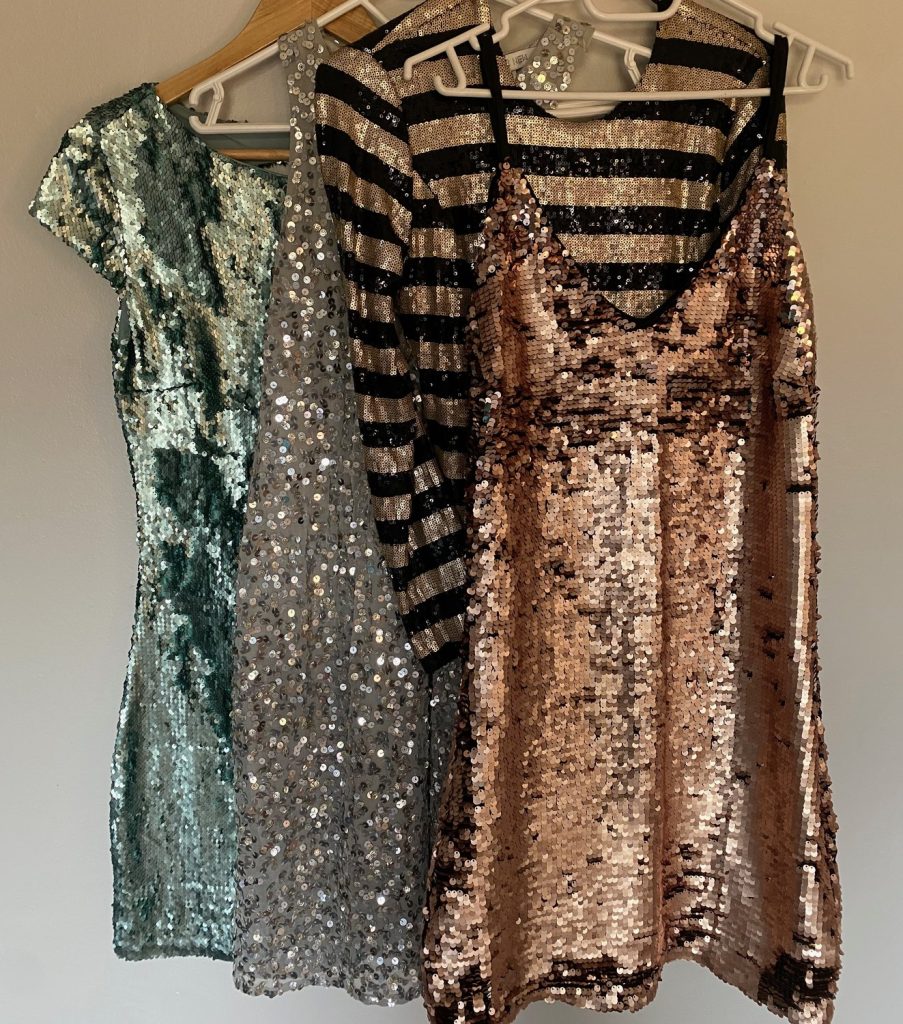
We’re holding our responsibilities, whilst also letting it loose and letting our inner children jump in the ball pit and wear the cute sparkly dresses.
When grown women call themselves ‘girls,’ what does that signal?
All of it. Depending entirely on context.
“Girls’ night out” is about shedding the weight of adult roles for an evening, together. “I’m such a girl for crying at this” is apologising for having feelings — which, for the record, we should all stop doing. “Just a girl,” in the Gen Z, Sabrina Carpenter sense, is a deliberate wink — I see your expectations, and I’m opting out, thanks. “Me and my girls” is pure warmth. Chosen family. The people who know everything.
From the outside, a woman calling herself a girl can look like she’s making herself smaller. From the inside, it might be the freest she’s felt all week. The word does different things on different days — because we are different things on different days. That tension is more interesting than any single answer.
Does intense friendship fade with age?
It changes. The capacity doesn’t go anywhere — life just fills up and the container gets smaller. Adult friendships become less all-consuming mostly because of time and competing demands, not because we’ve stopped caring that deeply.
What a lot of women genuinely miss is the permission. The permission to ring someone three times in a day. To be completely undone by a falling out. To let a person be your whole world for a season. Most of us still feel things that intensely. We’ve just got fewer spaces where that’s considered normal rather than “too much.”
The girl in us never stopped wanting that closeness. The woman in us just got busier.
What’s happening when grown women go to Taylor Swift concerts together?
It makes complete sense when you think about what a concert actually does. It creates a permission structure. Suddenly it’s not only okay but expected to feel everything loudly — cry at the bridge, know every word, be completely gone for it, and dance like nobody’s watching. That kind of licensed intensity is rare in adult life. We’re hungry for it. And let’s be honest — Taylor Swift just brings out the fun, heartbroken girl in all of us.
And going with your friends isn’t incidental — that’s the whole point. It’s the girl in you and the woman in you showing up at the same time, in the same place, unguarded and swept away by something.
Another part of it is the invisibility of a big crowd, which gives us a real-life sense of dancing like nobody’s watching, whilst also feeling connected and a sense of belonging.
Why does it feel harder to be openly enthusiastic as an adult?
Because somewhere along the way we learned that enthusiasm has a cost. Visible excitement can get read as naivety. Obsession as immaturity. There’s an unspoken expectation that adult women stay composed, measured, a bit ironic about their feelings — like caring too openly about something makes you less credible.
Girls haven’t learned that cost yet. They’ll sob at a film, scream at a concert, be completely consumed by a book — and nobody questions their seriousness for it. Women absorb that lesson gradually, usually without noticing. The good news is that it can be unlearned. Letting the girl back in isn’t regression. It’s recovery.
When the present feels uncertain, do we look back at girlhood?
Yes — and it makes sense. Girlhood, for a lot of women, sits just before the moment the full weight of expectations becomes visible. There’s comfort in that not-yet-knowing how many expectations and responsibilities are waiting for you. That feeling of open possibility before things got complicated.
Though it’s worth saying — not everyone is looking back at something warm. For some women, leaning into girlhood as an adult is about going back for something they never actually had. The lightness, the play, the permission to be a bit unfinished and to allow yourself all the things you weren’t allowed as a child. That’s not nostalgia. That’s arriving somewhere for the first time.
Is the pull toward girlhood about how heavy womanhood can feel?
Partly. But it’s not that womanhood is especially terrible right now — every phase has its own particular demands. What shifts is the texture of them.
What girlhood offers isn’t an escape. It’s a reminder. The version of you who felt things freely, who was obsessed and silly and didn’t have it all together — she’s not gone. She’s just one part of a much bigger whole.
Some days you’re the woman who has it together. Some days you’re the girl who just wants to eat snacks and cry at a film. Most days you’re somewhere in between. All of those parts are valid. All of those parts are you.
How to book with me
Working with couples and individuals on intimacy, connection, and the quieter parts of being human is at the centre of my work. I see clients in Dubai through Thrive Wellbeing Centre in JLT, and online for people based elsewhere. If something in this piece resonated and you’d like to explore it together, you’re welcome to get in touch.
Find me at Thrive Wellbeing Centre for bookings:
 https://www.thrive.ae
reception@thrive.ae
+971 56 895 2347
+971 4 514 7386
Related Posts
Comments (0)